Showing posts with label Exhibition. Show all posts

Tuesday, December 6, 2011

Christmas Shopping Night

CEAC’s Christmas Shopping Night is back this Thursday 8 December from 6pm! Opening in conjunction with the Annual Affordable Art and Recent Graduates Exhibitions, we will be having 15% off everything in the gallery shop for one night only.


The Corban Estate Arts Centre Gallery Shop is open daily from 10am – 4.30pm and features beautiful handmade artworks and crafts for sale by emerging and established artists. We stock a range of cards and publications, ceramics, jewellery, glass, craft, textiles, prints and t-shirts.

A selection of work can be viewed on our website and we are happy to gift wrap and post items to you. If you are unable to make the Christmas Shopping night, mention this offer and receive 10% off any product for the whole of December in the gallery shop excluding gift vouchers


CORBAN ESTATE ARTS CENTRE 426 Great North Road (Entrance off Mt Lebanon Lane) Henderson www.ceac.org.nz Phone 838 4455


Tuesday, October 25, 2011

Tabatha Forbes


I don’t know your name (but I’ll call you…)


The series title: I don’t know your name (but I’ll call you...) refers to the early processes of naming / identification and the need to categorise and label in order to perceive the value / place of the specimen (flora or fauna).   The weeds or unintentional plants of this place, are given placement and value in their documentation, painted and preserved on the original fruit crates, which like many of the plants here no longer have any human use.  


Prior to this series, I have actively sought to identify plant species using botanical and local / Maori names.  In this series despite the inclusion of some obvious species (.i.e. dandelion) the names have been removed as if the plant is being newly claimed / discovered.   The result is an expression of our confused understanding ; a last minute attempt to appreciate and consider, to place, value and in a sense, take a fresh responsibility for.


Each plant is renamed to include forbesii, based on a typical c18th dedication to the botanist/naturalist who originally ‘discovered’ the plant.  In this case I have walked around the site to collect my plants, renaming and reclaiming them for the purpose of my work.


Their representation is faded; a constructed history reminiscent of the original function of the boxes and the original status of the ‘exotic’ introduced plant long since fallen from grace and demoted to ‘weed’.


More obviously, the collection of weeds and crates refers directly to how we perceive waste, and what constitutes as value.  


Written by Tabatha Forbes for I don't know your name (but I'll call you...) on show at the Corban Estate Arts Centre until the 4th of December.


Wednesday, July 27, 2011

Up close and personal with some of Peter Sauerbiers work…

Over the next few weeks I will be having a closer look at some of Peter’s work from our current exhibition, Re-Made: the Assembled World of Peter Sauerbier.
First up is the many spouted oversized teapot aptly named Almost Functional. I love this work and the story behind it (see below in Peter’s own words). Personally, it puts me in mind of the Mad Hatters Tea Party or some sort of magical pot used to concoct potions and spells.

If we jump back to real life though, part of the charm of Peter’s work is figuring out what all the pieces are from and where he may have got them.

The brass jardinière’s original use would have been as a plant pot, probably placed outdoors on a porch or in a landscaped garden setting. The legs and top were from two different Edwardian lamps – electric lighting was only just being introduced into homes during the Edwardian period (1901 – 1910) and would also have been limited to those who could afford it so the lamps would have been originally very expensive items. The stylised plant/leaf motifs decorating the brass lid of the pot are Art Nouveau and are likely to have come from a Tiffany style lamp, popular during the Edwardian time period.

My stepfather pointed out to me that the small dangling bell like objects on the bottom are probably curtain weights – he remembers having something similar on the bottom of the curtains in his parents ‘front room’ when he was a child – they were used to keep the curtains from blowing about when the windows were open.

The fabulous clawed feet, from a different, possibly silver plated lamp, are particularly anthropomorphic, making me wonder if Almost Functional has a life of its own… I wouldn’t be surprised if it comes to life at night and has a wander around the gallery, chatting to Peter’s bird sculptures on its way!


Lisa Rogers
curator


Almost Functional
1993
Materials: Brass Jardinière (approx 100 year old), Top: Cast iron door knobs, Legs and Top: Part of Edwardian lamp, Hanging: Lid from lamp fittings, Victorian kerosene lamp, pewter coffee pot spouts, gas pipe tubing.

“My favourite place for fossicking among the junk and second hand items is at flea markets. On one occasion I was browsing as usual when I asked an old man what was in a cardboard box he had on his stall. He said “How do I know, have a look for yourself,” so I opened it to discover 14 tea or coffee pot spouts. A find like that absolutely made my day. A few weeks later I saw an old lady setting out her bits and pieces, amongst which I noticed an old brass flower pot. It was really on its way out, so I didn’t take much notice at the time, but a bit later I realised I could use it to make the 14 spouted coffee pot! I went straight back but it seemed to have been sold. Then I saw it in her van and she said that when I had asked the price she had changed her mind about selling such an old family heirloom. It had been in the family for about a century and she couldn’t bear to part with it. However when I told her what I had in mind to do with it I could see the twinkle in her eyes and she said, “It’s all yours.”

Peter Sauerbier


Monday, November 15, 2010

Make Do. Get By. Live Life

The Vigneron at the Corban Estate Art Centre Gallery - December 5th 2010.
Writing by Kyla Mackenzie.

In the former living room of the Corban family homestead, built in 1923, the 100 year life of Najib Corban is celebrated in the exhibition The Vigneron. Son of pioneering winemaker Assid Abraham Corban and Najibie Corban, this humble, hard working family-man is remembered through images, words, and wine. Fittingly, the ArtSpeak for this exhibition took place in the estate's cellar, built in 1907 by Najib's father. His son Brian, grandson Ben Corban and Peter Gough from Ngatarawa wine (owned by Brian and Alwyn Corban) spoke before a gathering of largely friends and family.


Born in 1909, Najib was the youngest of four older brothers and sisters, a large family typical to this era in New Zealand. He left school at age 12, a norm in those days, to work at Corban Winery Estate set up by Assid and Najibie, his enterprising and hardworking parents from Lebanon. Large families and their labour resources enabled the “human engineering”, as Brian Corban puts it, required for surviving and building a future. Najib's failing eyesight from the age of 9 was not to prevent him from making a full contribution to the family business.

Najib worked a long, often hard but productive life as vigneron, or vine grower. A man who worked much of his life using the simplest of make-shift tools, he also pioneered other vineyards in Henderson Valley, Whenuapai, Kumeu, Taupaki and Gisborne. In his 90s he was still working hard cultivating his and his family's properties. Principled and persevering, in the words of his son Brian Corban, Najib was “the greatest man that I ever knew”.

As Najib was reaching his 100th year, the decision to recognize his life and philosophy was developed into an understated but compelling tribute by design studio Alt Group. Ben Corban, grandson to Najib and managing director of this award-winning design company, was inspired by the man and grandfather who instilled such a strong work ethic in his children and their children. The quality of the design has won them numerous awards, including Gold and Silver Lions at the Cannes Lion Awards in France and a Pinnacle Award at the AGDA awards in Australia this year.

The book entitled The Vigneron is central to the project. Selected images and text from it are reformulated into an arrangement on and against the walls of the gallery. Beginning with its simple uncoated card packet, the unbound, hand-stitched book, was designed to have a low-key, “hand-made feel” both for his blind grandfather to touch and to reflect a life of simple means. The font on front and back covers is hand-painted, raised, and glossy. Gold surfaces on pages inside also provide textural contrasts.


The exhibition includes contextual historic images of the early site and dwellings. The main gallery showcases images of Najib’s handmade and repaired tools, photographed by Alistair Guthrie. Ben recalls of the worn pitchfork featured in the tribute book, “I spent endless summers on the end of those pitchforks”. The tools, humble items in themselves, vividly illustrate the do-it-yourself, waste-not-want-not values of the times and of the man himself. Some are cobbled together with wire or bound with rags. Others are modified, reshaped and fused with other items to form new uses. Though an historical tribute, isolated on the page, they also become iconic and timeless. They illustrate the pithy maxims towards the end of the book: Make Do and Get By. Live Life is followed by Full Stop, which marks the end of the story and a long and full life.

Diminishing orbs of gold on pages of black suggest the disappearing sight of Najib, who worked on the estate until he was in his 70s. Whilst flicking through the pages from back to front, or viewing them on the wall, however, the gold spheres also suggest the growth cycle of the grape.

We are given particular entry into the personality and philosophy of this man through a selection of his engaging poetry which is sometimes droll and often contemplative. They come from his published collection, Footprints in the Sand, printed in 1983.


The Other Side:

Two sides to an argument,
Two sides to a coin,
Two sides to anything,
That we try to join,
Two sides to a person,
Two sides to reveal,
But often there's one side,
That we like to conceal.
Look in a mirror.
What do we see?
Just the exterior image,
Of you or me.


True Story

I bet on a horse,
He ran in a race,
I lost all my money,
He couldn't make the pace.


His son Brian notes him as being a “humble man”, and a “tough task-maker”. A short, candid poem describing the dark, compressed sensations of depression points to further complexity. A regular church goer of St Michael's Church nearby (and which is now on the estate), Najib's faith in God is revealed through his open wonder at nature and gratitude for life's gifts: family, marriage, and the strength to endure hardship.

The fact that Najib left school at 12 like many children of pioneering families, and had impaired sight, may seem surprising in view of his literacy skills. Ben relates that his grandfather “always had a poem on the boil” and recalls him as loving language and story-telling. His love of poetry also reflects the times. Much more so than now, the writing and reciting of poetry was once a comfort as well as private and social entertainment.

Najib would note his verses in chalk on the blackboard and family members would transcribe them to paper. His grandson recalls the importance of momentum, and upon interruptions by phone, being asked; “Ben, Ben, would you make of note of this for me, please”.

The blackboard and chalk then, was emblazoned on the memory of Ben Corban. It was given meaningful form on 100 special edition magnums of red wine in honour of his grandfather and the 100th year he reached. (Najib died 2 months before his birthday in 2009). The bottles, coated in blackboard paint and editioned in chalk, greet the viewer as they enter the exhibition space. The number 100 provided a governing principle. It is the number of pages in the book,
The Vigneron. ($100 is also its price.)

However, the project also took on timely universal values in the face of recession with its messages of resilience, perseverance and gratitude. The context of the bleak economic environment of 2009, meant this project took on added personal meaning for Alt Group. The man who extolled the virtues of making do, getting by and the pride to be gained through hard work, experienced, as Ben says, “Depressions, recessions, boom-times and bust-times”. The sayings in the book became potent “studio mantras” at work.

The recession continues. The quiet story they present of Najib Corban and his inspiring approach to life, therefore, hits just the right note.


Wednesday, November 10, 2010

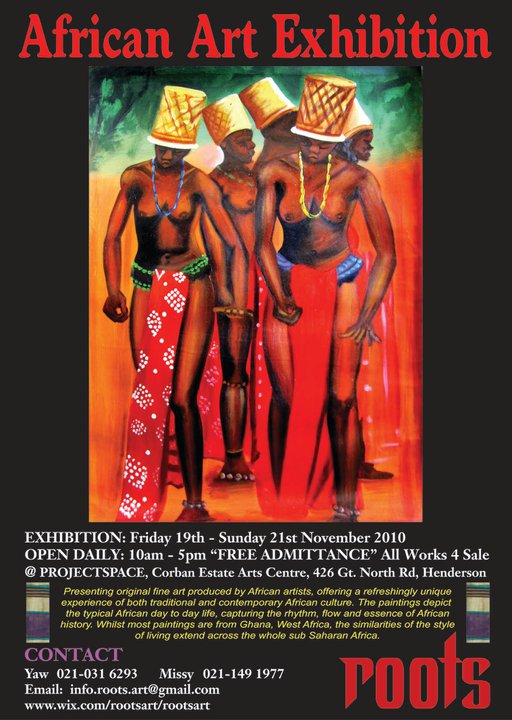
Coming Up @ the Corban Estate


For more information contact Yaw 021 0316293, Missy 021 1491977 email info.roots.art@gmail.com or visit their website

Wednesday, October 20, 2010

Metonymy Closing Event; Awards and Performance Night

Photos from the Metonymy performance evening and awards night.
These were stollen from Renee Liangs facebook album.
..


Tuesday, September 7, 2010

Metonymy 2010 - forging new creative connections

CEAC Staff member Anne-Sophie Adelys photographed the opening of the Metonymy 2010 exhibition. Metonymy is on show at the Corban Estate Arts Centre Gallery until the 17th of October.

Click here for more information and other Metonymy events.


Quotes from the 2010 Metonymy selection panel.

"Some of the works in the show have a very simple and simplistic approach to the collaborative process with two ideas or concepts placed together or juxtaposed.

The more outstanding works in the exhibition shows that the collaboration has occurred at all stages from the initial ideas through the development of those idea and the production process,
culminating in an expanded work which has gained in complexity and density."

Joint comment by Panel - John Daly-Peoples, Simon Ingram, Riemke Ensing, Sam Sampson

"This is an unusual and innovative exhibition, where you can dig deep and discover diverse, sensitive, surprising and sometimes puzzling imagination at work in a wide and exciting range of media. I found these collaborations an enticement for the mind, eye and ear ."
- Riemke Ensing (one of the Panel)
.


CEAC Director Martin Sutcliffe at the Metonymy exhibition opening


'Miss Communication-Mr Communication' Jeong Yeung and Callum Stembridge


'Erstwhile' Kate Sellars and Penny Somervaille


'Erstwhile' (detail)


'Layers of cold' Natalie Rogers and Maddy King


'Human Archeology' Paul Woodruffe and Renee Liang


'Isis' John Eaden and Jane Griffin


'Pupa' Alice Wong and Julie Ryan


'Pathways we carry with us' Isla Osborne and Miriam Barr


'Blind' Dianne Rimmer and Rata Gordon


'All our lovely ladies' Ian Peter Weston and Janet Charman


'The tobacco tin and other distractions' Hana De Roo and Rosetta Allan


'Omphalos' Paul Brunton and Michalia Arathimos


Anne-Sophie Adelys and Helen Sword


Viewing 'The Sound of Silence' Erin Gaffney and Leigh Fitzjames


Renee Liang with her work 'Human Archeology'

Tuesday, July 27, 2010

Three exhibitions currently on show at the Corban Estate Gallery


from July 16 – August 29, 2010

Pull Poke Fold by Wendy Kawabata

Ports of Call by Beth Sergeant

In Lieu of Flowers by Alison Milne

Three exhibitions currently on show at the Corban Estate Homestead Gallery overlap in associations, particularly in their explorations of memory and feminine histories of craft.

Beth Sergeant, bookmaker and printmaker, and Alison Milne, handweaver, were invited to respond to the touring exhibition Pull Poke Fold by Wendy Kawabata. Their explorations of the act of remembrance are entwined with a love of traditional female hand-craft.

Kawabata, artist and Associate Professor at the University of Hawaii, continues her investigation of memory, migration and cultural drift, absence and presence, and the meditative and cumulative process of repetitive hand-work. Just a few works can be noted here.

In the installation Stemma, kukui nuts have been carefully wrapped and transformed by thread in intense hues of red. Glass vessels rise up amongst the clusters, storing some of the vibrant balls. Certain facts stimulate associations for this viewer. 'Stemma' can mean genealogy or family tree. The kukui nut tree, of great medical and practical use in many South East Asian and Pacific cultures, is loaded with rich meaning in Hawaiin culture. A symbol of enlightenment and protection, the oil laden nut was burned to provide light. The duration of the light was used to measure time.

Kawabata, who owes her surname to her Japanese husband, has referred to the work as “ an attempt to depict the problems of defining identity through bloodlines, and in defining my relationship to Hawaii through marriage and family...”. Her cocooned and gem-like constellations can be seen as a personal enquiry into the nature of identity, belonging, female tradition and memory.

A stitch in time: the “New World/Blind World” paper series have an airy, willo’-the-wisp quality. Tiny perforations of the needle articulate and conflate whispers of colonial figures, landmass and miscellaneous objects. Infamous but murky identities such as Calamity Jane seem to inhabit a boundless space overlaid with a decorative or interlocking pattern. The works describe the simultaneity of cultural identifications, and the movement of peoples. She asks, “As individuals, families, and communities migrate, what do they carry with them? Who or what is shifted, obscured, forgotten?”

“Withdrawn from Circulation”, is a loosely geometric formation of transformed, ‘redundant books’. It further explores the repetitive (feminine) act alongside concepts of knowledge and its preservation. By folding the corners of each page, she 'dog-ears' in formal fashion, alluding “ (to) our desire to keep and collect the past”. Fastened to the wall, stripped of their outer binding, and truncated with origami-like precision, the books fan out creating soft shifts of light and dark. Rather than overtly melancholy, however, they are somehow buoyant, though mysterious in their withholding of knowledge.

They reference the every-day book as a physical vessel of the past in quite a different way to Sergeant’s two hand-made books. These monogrammed books are devoted to each of her grandparents in the adjacent installation Ports of Call. Blank pages create loaded intervals between extracts of historical documents and images of family heirlooms. Old cotton reels and darning thread nearby underscore Sergeant’s particular interest in her grandmother’s sewing skills. Matilda’s white hand-made wedding night-dress has particular presence.

Sergeant's story of ancestral migration complements Kawabata's exploration of cultural memory. Her tableau is comprised of historical artifacts which describe the journey of William Jolley, an engineer and his wife Matilda, to Wellington in the late 19th century. The manual skills of both husband and wife are celebrated but it is a winding piece of white sewing tape which unifies the display. Sewing here, has among its connotations, familial love, solidarity and continuity. The wrapped kukui nut of Kawabata also invites suggestions of the protected and the beloved.

An antique jigsaw, A World in Pieces, is put to poignant and ambiguous use. Personal worlds as well as ‘New Worlds’, are forced to adjust in the wake of migration and settlement. This carved up world map is also printed in partial form on old damask. On it, Sergeant plots the migration of her grandparents through stitch; buttons marking the stops.

Alison Milne celebrates Pacific traditions of eclectic and colourful grave decoration in her In Lieu of Flowers. Recognisable in the display is the hand-weaving of cotton rags, a technique which echoes that used by grandmothers and great-grandmothers in this country. Woven ropes of fabric form snaking vines along knitting needles which stake out the grave’s perimeter. Simulated hand-knitted blossoms, also made from recycled rags, surround and cover around the mock grave on its faux grass. Strewn on top of the grave are small toys. They lie in custom-made knitted beds, affectionately referencing the coffin beneath.

Above this exuberant display hangs a mat comprised of warp-handwoven fabric strips. It parallels, in hybrid fashion, the traditional preparation and making of mats by women in Pacific cultures which were then exchanged at weddings and funerals.

A part homage to Kawabata's home in the Pacific, Milne impresses on the viewer, feminine hand-craft as a labour of love and a tool of celebratory artistic expression.

The formal beauty of Kawabata's process driven work contrasts with the seemingly casual display of Ports of Call and In Lieu of Flowers. Together, however, the three exhibitions investigate preoccupations which complement each-other in open-ended ways.


Kyla Mackenzie

'Geronimo's Son (II)' 2010 (detail) Wendy Kawabata


'Stemma' 2007 Wendy Kawabata


'Stemma' (detail)

'Constellating' 2009 (detail) Wendy Kawabata


'Withdrawn from Circulation' 2008 Wendy Kawabata


'Withdrawn from Circulation' 2008 (detail)


'In Lieu of Flowers' Alison Milne


'In Lieu of Flowers' (detail)


'Ports of Call' Beth Serjeant


'Ports of Call' (detail)