Friday, April 1, 2011

Open Studio Weekend @ CEAC

A busy, rewarding weekend – if a little wet.
Photos in no particular order.
..


In conclusion

Rachael McKinnon reviews Selene Simcox: In Residence

After completing her BFA at Whitecliffe College Arts and Desgin, Selene Simcox is now in the
second year of her Masters of Arts Management.

The exhibition on March 11 was the culmination of her period as artist in residence at the Manthel van Reijn Studio. And it was her residency in the studio that was key to her artistic output.

Simcox's pieces negotiate the space within which she worked. There is a sparse, breeze-block, concrete and steel interior area and a modern courtyard with large concrete slabs on the exterior. Simcox collapses these boundaries by bringing textures from each area respectively into the other space.

By applying duraseal to the courtyard tiles and using a squeegee of warm grey paint to capture the surface, she is able to bring the surface inside and adorn the walls of the studio space. Inevitably, through the vehicle of Simcox herself, a human, organic and kinetic element is transferred onto the industrial texture. This also occurs as she paints onto vinyl on the breeze-block brick surfaces. The brick outlines are clearly visible but so is the curving of the squeegee held by the artist's hand; so is the dripping of the paint and the inconsistencies of pressure.

Simcox's work derives its meaning from the materials and processes that, in creating it, are employed. The Duraseal creates painterly illusions that cover adhesive factory-made building materials. The process creates dynamism and aesthetic, visual texture. The exhibit is not tactile, but serves to satisfy aesthetically. The sewn pouf installed outside on the courtyard as a means of creating some indoor space outside, invites touching and invites collapsing into - and yet its purpose is derived from the way it has escaped its boundaries as a indoor household item. More so, I think it becomes a significant element of hand-made labour nestled amongst the rigid lines of modern architecture.

There is a transience in the works. By imprinting - a nostalgic act for many people who have made rubbings of various textures when they were children - there is a documentation of textures that may one day be destroyed or changed. The imprints capture these surfaces as they were in one particular moment and then they are solidified as documented art. The textural repetition, created by her squeegee impressions of the various textures, prompts the viewer to consider the spaces they occupy and the textures that surround. These are textures that may once have resided in many people's blind-spots and are now being elevated through process. Yet, in repetition there is an emphasis on Simcox's role as artist - the way her hand is at work through each application of paint and the naturalistic movements juxtaposed against modern industrial and commercial spaces.


Selene Simcox in Residence at Manthel van Reijn Studio 2011


Selene Simcox Jump 2011 Acrylic on vinly 1220 x 300mm


Selene Simcox Repeat Repeat & Sideway Glances Acrylic on vinyl 1080 x 1240mm


Selene Simcox Repeat & Jump 2 2011 Acrylic on vinyl


Selene Simcox Sidewalk 2011 Acrylic on Duraseal on board 800 diameter


Selene Simcox Sidewalk 2 2011 Acrylic on Duraseal on board 570 x 600mm


Selene Simcox Untitled 2011 Acrylic on vinyl, polystyrene balls 1300mm diameter

Thursday, March 31, 2011

Thrash it out in the creative moshpit @ ART Generator Network*


A series of events for entrepreneurial people working in the creative sector, talking about some of the big issues and bringing them down to earth.


We’re back, we're bold, we're loud and we're proud. ART Generator Network has taken some time out to restock and have four events where we'll thrash some things out - some could say entirely appropriate, as we are hosting these events on K’Rd… Our first event is:

Good luck is hard work
with Otis Frizzell and Qiujing Wong
Good luck is a collision of preparation, timing and connections - that's how a creative career evolves. Hear from Otis Frizzell and Qiujing Wong about their 'lucky' careers.
See below for more about Otis and Q…

Wednesday 13 April, 6.00 to 9.00 pm
@ The Function Room [Club Seven], upstairs at The Family and Naval, cnr Pitt St and K Rd
Come for a drink and some nibbles, a great time, some excellent networking and an inspiring room full of smart, creative people!
Tickets ($25) are limited! Get yours here

ART Generator Network | meet, network, know, grow & enjoy!
For more about the other fab guest speakers we have coming up, and tricky topics we are thrashing out, see here

ABOUT our marvellous guest speakers

Otis Frizzell is an artistic innovator, style leader, artist, hip-hop performer, radio personality, tattooist and graphic designer. Otis entered public life in his late teens as half of popular hip-hop duo MC OJ and Rhythm Slave. He has performed as Joint Force and Stylee Crew.
Otis has more than 20 years of public graffiti art experience. His first solo exhibition Opto 2000 produced with pop culture manipulator Mike Weston, marked the beginning of an innovative art production and management collaboration that has produced a playful and challenging stream of works, repeatedly setting a benchmark in artistic and technical achievement in the chosen media.
His work can be found at the Parnell Gallery, Lethams Gallery (Herne Bay) the Saatchi and Saatchi offices, Robbie Williams’ London management office IE Music, on KFC packaging, Breast cancer T shirts, Grand Prix Racing Cars, Drag Strips, Playstation Ads, numerous walls and backdrops, TV2 promos, record sleeves of pop artists such as Che Fu and more recently Tiki Taane and Fat Freddys Drop.
His broadcasting partnership with Mark “Slave” Williams carried the duo into a long running Wednesday drive-time radio slot on 95bFM called The Wednesday Special and then to hosting the Base FM breakfast show. The duo’s radio celebrity transferred to television with the award winning Mo’ Show.
In early 2005, Otis abandoned TV celebrity and the offer of a fourth Mo Show series, to focus on art projects working out of The Area studio with Mike Weston as half of the Art Brand, Weston Frizzell. As a solo artist and art collaborator, Otis is now enjoying life as a full time artist, print-maker and illustrator.
Borderless is led by Qiujing Wong, an entrepreneur and social change agent. At a personal level, Qiujing is committed to creative excellence, authentic leadership and building strong and meaningful relationships. She has a degree in Commerce and a Post Graduate Diploma in Communications and continues to further her own development in areas of leadership, business and social change.

Borderless is a Social Change Agency dedicated to inspiring positive change through commercials, films and creative campaigns. Since 2005, the Borderless team has been committed to change in a number of ways with highlights that include; inspiring support for grandmothers in Africa, moving youth against drugs in North America, driving press freedoms in Nepal, creating better relationships with China and most recently leading change in New Zealand through the creation of New Zealand's first nationwide accessibility programme.

Sunday, March 27, 2011

Pop-up Cafe at CEAC

Delicious Kokako coffee and a selection of light culinary delights are now available You can find the pop-up café at CEAC on Tuesday - Friday from 9.30am - 3.30pm and on Saturday
10am – 4pm with live music.

Richard Ingamells and Sarah Roberts


Tuesday, February 15, 2011

SELENE SIMCOX IN RESIDENCE


Manthel van Reijn Studio presents - SELENE SIMCOX IN RESIDENCE

Monday 21 February – Friday 11 March 2011
OPEN STUDIO: Monday 7 March – Thursday 10 March, 10am – 6pm
ONE NIGHT ONLY EXHIBITION: Friday 11 March, 5.30 – 7.30pm


Auckland artist Selene Simcox is in residence at Manthel van Reijn Studio (Mt Eden) from 21 February to 11 March and continues to explore the relationship between paint and vinyl and the role that performance plays in her work.

“There are workman-like approaches in this work, rules and boundaries evolve like a fairytale or narrative around the development of each artwork. These rules and boundaries are given form by measurement, time and props that provide the framework for creativity to move through”.

The vinyl surface allows for the fluid movement of painting-in-performance to act upon it. The paint is moved with a squeegee, tracing the artist’s performance, stripping painting back to the barest moment, leaving a mark that becomes the only evidence that the artist has been there.

Selene Simcox graduated from Whitecliffe College of Arts and Design in 2009 and has exhibited at The Bluecoat (Liverpool, England), Massey School of Fine Arts (Wellington) and recently at Corban Estate (Auckland). This is her first solo show.

Selene Simcox at Manthel van Reijn Studio, Banklink House, 12 Normanby Road, Mt Eden, Auckland, 21 Feb-11 Mar 2011. Entrance through Normanby Road Foyer or the Edwin St Carpark.

MEDIA ENQUIRIES: Selene Simcox, selenes@clear.net.nz, mob: 021 169 9084, www.selenesimcox.wordpress.com

UPDATE:
Selene Simcox was recently interviewed by Amy MacKinnon from The Aucklander,and by Karley Feaver.

Wednesday, December 8, 2010

Local Talent


A selection of art made in our Children’s Holiday Classes, Term Classes and School Education programme over the past few years.

We would like to credit the individual artists, so please comment (below) if you recognise any of the artworks.


Family Ties with Mandy Patmore


Super Junk Fusion with Andrew Hall


Mask Making with Kris Kell


Portraiture with Anne-Sophie Adelys


Tapa Mono-prints with Joy Tiumalu


Sun prints with Lynn Houghton


Cartoon Self-portraits with Victoria Scott


Clay Cupcakes with Kairava Gullatz


Clay Castles with Kairava Gullatz


Kiwiana Clocks with Joy Tiumalu


Comic T'shirts with Grant Cole
Artwork by Alex Terzaghi


Tuesday, November 16, 2010

Summer School Tutor Interview Series - Bridget Brandon


CEAC staff member Kyla Mackenzie interviews Bridget Brandon in the lead-up to her Summer School class ‘Igniting the Creative Fire of Writing’ in January 2011. Click HERE for a full description of Bridgets' class & enrolment details.


KM: Your upcoming writing course in January Igniting the Creative Fire of Writing revolves around each participant's own life story. Is this focus on understanding one's own life, a crucial step for meaningful writing of any kind?

BB: I feel the core of my work is about creating the platform for individuals to dive into themselves and at the same time into their creativity...It seems we have a lot of hang ups about our writing in particular. In addition people think their life is ordinary and they can’t express themselves. Given the right circumstances and encouragement most people are creative.

KM: A previous student of yours said:
“I feel that 'writing' my life is also like 'righting' my life - setting it out before me, so I can look at and understand the reason for decisions I have made throughout the years I have been writing about.” (http://storyworks.com.au) Is this a common experience for your students?

BB: Yes it is!

My goal is to allow people to see their life is not ordinary. No ones life is ordinary. (It is) quite the opposite and telling their stories and having their stories listened to in a non judgemental way allows them to appreciate the uniqueness of their life. With the feedback I focus on what works and I get the group to provide feedback on what works. Once someone is feeling confident, sometimes then I introduce the element of what else or what if...

KM: What is an example of one of your ‘loosening up’ exercises to get thoughts and memories flowing?

BB: One example is to draw a word out of a hat and write about what it means for 5 minutes.
Another is to choose a colour and then keep observing where you see that colour and next day write for 10 minutes on that colour.

KM: What's an example of a writing discipline you get your students to use?

BB: Just do it, just have a go. Early on I give out 5 writing principles. These really help people deal with their critic and issues. Each day they choose one to work with and at the end of the day we check in to see how they have gone. So the key is active engagement and not letting them get away with saying they can’t do it.

…. Focus on the story and the words will follow whereas if you focus on the words paraylsis sets in and the story is lost.

An excerpt below is written by someone who I think sums up my approach:


I arrived at the Larapinta River without a story in my mind and no idea whether I would actually be able to write anything. I have never had any confidence about writing and this was my first experience of putting my stories onto paper. The week was full of insights, friendship, grace and fun. Thinking about what made it possible for me to get so much out of it. Here are some thoughts.

The written hints we were given (eg the Basic Prinicples/ Seven Rules//Haiku guidelines) were sufficient to give practical help and to set a tone of freedom without being prescriptive (ie that there was a "correct" way to write and a benchmark to achieve).

No activity went for too long - most of the exercises were quite short in duration and I had a sense that even if I wasn't sure I was "on task" it didn't matter as the time spent doing it was limited and the next task would come along shortly. I didn't have time to "get stuck".

The reading back to the group was great - it gave me a sense of each person's uniqueness and that there were a lot of different ways of approaching a task - all of which were valid and which, therefore, validated my own voice/expression.

The fact that it was compulsory to read aloud was important - it helped to know that you "could run but you couldn't hide"(as it were). At some point you had to put into voice the words written on the page.

I arrived at the Larapinta River without a story in my mind and no idea whether I would actually be able to write anything. I have never had any confidence about writing and this was my first experience of putting my stories onto paper. The week was full of insights, friendship, grace and fun. Thinking about what made it possible for me to get so much out of it. Here are some thoughts.

The written hints we were given (eg the Basic Principles/ Seven Rules/Haiku guidelines) were sufficient to give practical help and to set a tone of freedom without being prescriptive (ie that there was a "correct" way to write and a benchmark to achieve).

No activity went for too long - most of the exercises were quite short in duration and I had a sense that even if I wasn't sure I was "on task" it didn't matter as the time spent doing it was limited and the next task would come along shortly. I didn't have time to "get stuck".

The reading back to the group was great - it gave me a sense of each person's uniqueness and that there were a lot of different ways of approaching a task - all of which were valid and which, therefore, validated my own voice/expression.

The fact that it was compulsory to read aloud was important - it helped to know that you "could run but you couldn't hide"(as it were). At some point you had to put into voice the words written on the page.

I did find that once my secrets became stories they were set free. There was an alchemy that took place. The stories still belonged to me but they didn't have the same grip on me as before. They became things to respect as the experiences that had shaped me and I didn't feel scared that people would judge me.

Telling my stories allowed my light to shine. Active listening was important - you knew that at the end of your reading there would be comments which kept me grounded in the experience (not able to quickly slam the book and pretend it had never happened).

Working with metaphor was really useful. It was helpful to step outside my own reality and to use the language of "tree/landscape/nature" to write more evocatively. It allowed me to experiment with language and to look at situations from a different perspective.

The process of rewriting the "hard" situation using the language of the landscape was particularly helpful. It changed the language and tone of the story completely and that was a revelation to me.

The process of drawing the life scheme (rapids/billabongs/flowing) was very useful. To then take a "chapter" and break it down into "moments" made it easy to approach the story. It also allowed me to see how rich each of those "chapters" was and that there was a wealth of material for stories. I felt proud of my life when I thought of it like that - such a rich life!!

The consistency around the time keeping was good. Knowing that there was a set time to complete a task and that we would be kept to that made it possible to concentrate on the task at hand - your instruction to "find a way to finish the sentence" meant that the task didn't "bleed" into the time available.

The clarity of instructions and permission to take the task wherever it wanted to go. It meant there was both structure and freedom.

Bridget’s management of the "subtle “level to the group was masterful. Especially on the morning that Paul left - you brought us back to a a more centred space. You did this by naming the tension that was in the group and by asking us to renew our commitment to the process.

Having all the logistics taken care of was fantastic - it freed me to concentrate on the tasks at hand - no distractions and no rushing to ensure that I was on time for tasks - I was free to chill out and follow my own thoughts.
~ Participant 2005

Monday, November 15, 2010

Make Do. Get By. Live Life

The Vigneron at the Corban Estate Art Centre Gallery - December 5th 2010.
Writing by Kyla Mackenzie.

In the former living room of the Corban family homestead, built in 1923, the 100 year life of Najib Corban is celebrated in the exhibition The Vigneron. Son of pioneering winemaker Assid Abraham Corban and Najibie Corban, this humble, hard working family-man is remembered through images, words, and wine. Fittingly, the ArtSpeak for this exhibition took place in the estate's cellar, built in 1907 by Najib's father. His son Brian, grandson Ben Corban and Peter Gough from Ngatarawa wine (owned by Brian and Alwyn Corban) spoke before a gathering of largely friends and family.


Born in 1909, Najib was the youngest of four older brothers and sisters, a large family typical to this era in New Zealand. He left school at age 12, a norm in those days, to work at Corban Winery Estate set up by Assid and Najibie, his enterprising and hardworking parents from Lebanon. Large families and their labour resources enabled the “human engineering”, as Brian Corban puts it, required for surviving and building a future. Najib's failing eyesight from the age of 9 was not to prevent him from making a full contribution to the family business.

Najib worked a long, often hard but productive life as vigneron, or vine grower. A man who worked much of his life using the simplest of make-shift tools, he also pioneered other vineyards in Henderson Valley, Whenuapai, Kumeu, Taupaki and Gisborne. In his 90s he was still working hard cultivating his and his family's properties. Principled and persevering, in the words of his son Brian Corban, Najib was “the greatest man that I ever knew”.

As Najib was reaching his 100th year, the decision to recognize his life and philosophy was developed into an understated but compelling tribute by design studio Alt Group. Ben Corban, grandson to Najib and managing director of this award-winning design company, was inspired by the man and grandfather who instilled such a strong work ethic in his children and their children. The quality of the design has won them numerous awards, including Gold and Silver Lions at the Cannes Lion Awards in France and a Pinnacle Award at the AGDA awards in Australia this year.

The book entitled The Vigneron is central to the project. Selected images and text from it are reformulated into an arrangement on and against the walls of the gallery. Beginning with its simple uncoated card packet, the unbound, hand-stitched book, was designed to have a low-key, “hand-made feel” both for his blind grandfather to touch and to reflect a life of simple means. The font on front and back covers is hand-painted, raised, and glossy. Gold surfaces on pages inside also provide textural contrasts.


The exhibition includes contextual historic images of the early site and dwellings. The main gallery showcases images of Najib’s handmade and repaired tools, photographed by Alistair Guthrie. Ben recalls of the worn pitchfork featured in the tribute book, “I spent endless summers on the end of those pitchforks”. The tools, humble items in themselves, vividly illustrate the do-it-yourself, waste-not-want-not values of the times and of the man himself. Some are cobbled together with wire or bound with rags. Others are modified, reshaped and fused with other items to form new uses. Though an historical tribute, isolated on the page, they also become iconic and timeless. They illustrate the pithy maxims towards the end of the book: Make Do and Get By. Live Life is followed by Full Stop, which marks the end of the story and a long and full life.

Diminishing orbs of gold on pages of black suggest the disappearing sight of Najib, who worked on the estate until he was in his 70s. Whilst flicking through the pages from back to front, or viewing them on the wall, however, the gold spheres also suggest the growth cycle of the grape.

We are given particular entry into the personality and philosophy of this man through a selection of his engaging poetry which is sometimes droll and often contemplative. They come from his published collection, Footprints in the Sand, printed in 1983.


The Other Side:

Two sides to an argument,
Two sides to a coin,
Two sides to anything,
That we try to join,
Two sides to a person,
Two sides to reveal,
But often there's one side,
That we like to conceal.
Look in a mirror.
What do we see?
Just the exterior image,
Of you or me.


True Story

I bet on a horse,
He ran in a race,
I lost all my money,
He couldn't make the pace.


His son Brian notes him as being a “humble man”, and a “tough task-maker”. A short, candid poem describing the dark, compressed sensations of depression points to further complexity. A regular church goer of St Michael's Church nearby (and which is now on the estate), Najib's faith in God is revealed through his open wonder at nature and gratitude for life's gifts: family, marriage, and the strength to endure hardship.

The fact that Najib left school at 12 like many children of pioneering families, and had impaired sight, may seem surprising in view of his literacy skills. Ben relates that his grandfather “always had a poem on the boil” and recalls him as loving language and story-telling. His love of poetry also reflects the times. Much more so than now, the writing and reciting of poetry was once a comfort as well as private and social entertainment.

Najib would note his verses in chalk on the blackboard and family members would transcribe them to paper. His grandson recalls the importance of momentum, and upon interruptions by phone, being asked; “Ben, Ben, would you make of note of this for me, please”.

The blackboard and chalk then, was emblazoned on the memory of Ben Corban. It was given meaningful form on 100 special edition magnums of red wine in honour of his grandfather and the 100th year he reached. (Najib died 2 months before his birthday in 2009). The bottles, coated in blackboard paint and editioned in chalk, greet the viewer as they enter the exhibition space. The number 100 provided a governing principle. It is the number of pages in the book,
The Vigneron. ($100 is also its price.)

However, the project also took on timely universal values in the face of recession with its messages of resilience, perseverance and gratitude. The context of the bleak economic environment of 2009, meant this project took on added personal meaning for Alt Group. The man who extolled the virtues of making do, getting by and the pride to be gained through hard work, experienced, as Ben says, “Depressions, recessions, boom-times and bust-times”. The sayings in the book became potent “studio mantras” at work.

The recession continues. The quiet story they present of Najib Corban and his inspiring approach to life, therefore, hits just the right note.


Wednesday, November 10, 2010

Coming Up @ the Corban Estate


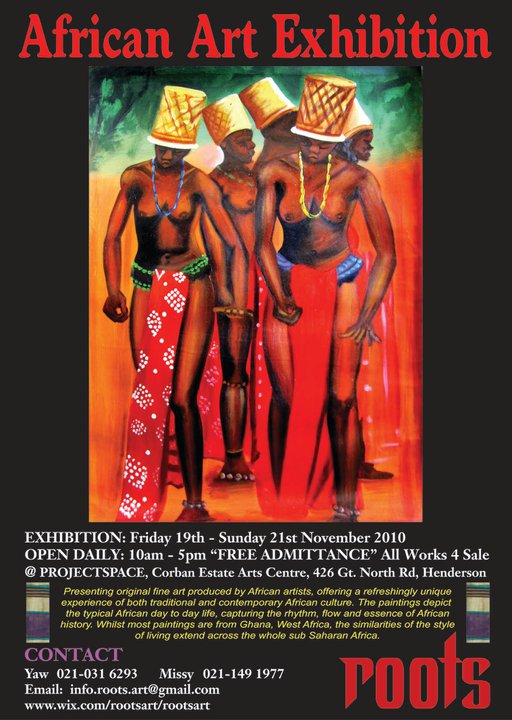
For more information contact Yaw 021 0316293, Missy 021 1491977 email info.roots.art@gmail.com or visit their website

Wednesday, October 27, 2010

Sewing School with Sarah Bird


"It was like being in Project Runway (one of my favourite shows!) – but without the competition edge. It was just pure fun! Four of us lined up in an arts studio, with our machines, piles of gorgeous vintage fabrics, books on sewing and appliqué, patterns and accessories to drool over."

Aimee from
On Top Of A Lily Pad reports back on a practice run of the 'Sew Inspired' Summer School Class with Sarah Bird.

Read the full story on Aimee's BLOG.


Wednesday, October 20, 2010

Metonymy Closing Event; Awards and Performance Night

Photos from the Metonymy performance evening and awards night.
These were stollen from Renee Liangs facebook album.
..


Wednesday, October 6, 2010

The Most Dedicated

Watch TMD create SubUrban Development. We'll let you know when TMD's next painting event takes place so you can watch in real-time.

Video by Askew